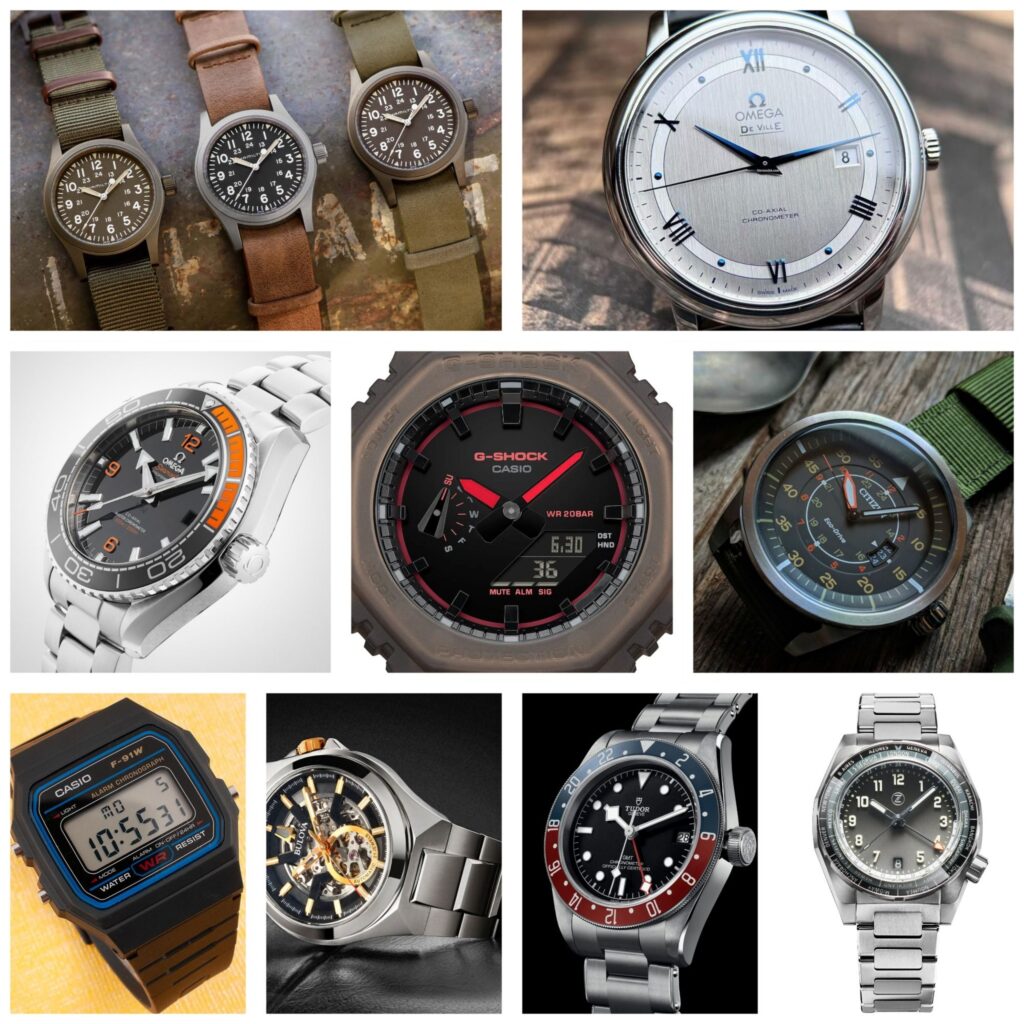
Not all watch brands play in the same space. A £50,000 Rolex and a £150 Seiko can both be “good watches,” but they’re aiming at completely different things — heritage, exclusivity, engineering, or simple everyday reliability. Understanding the broad categories brands fall into makes it much easier to figure out what you’re actually looking for as a buyer.
This guide breaks down five (optionally six) categories in plain English.
Luxury Brands
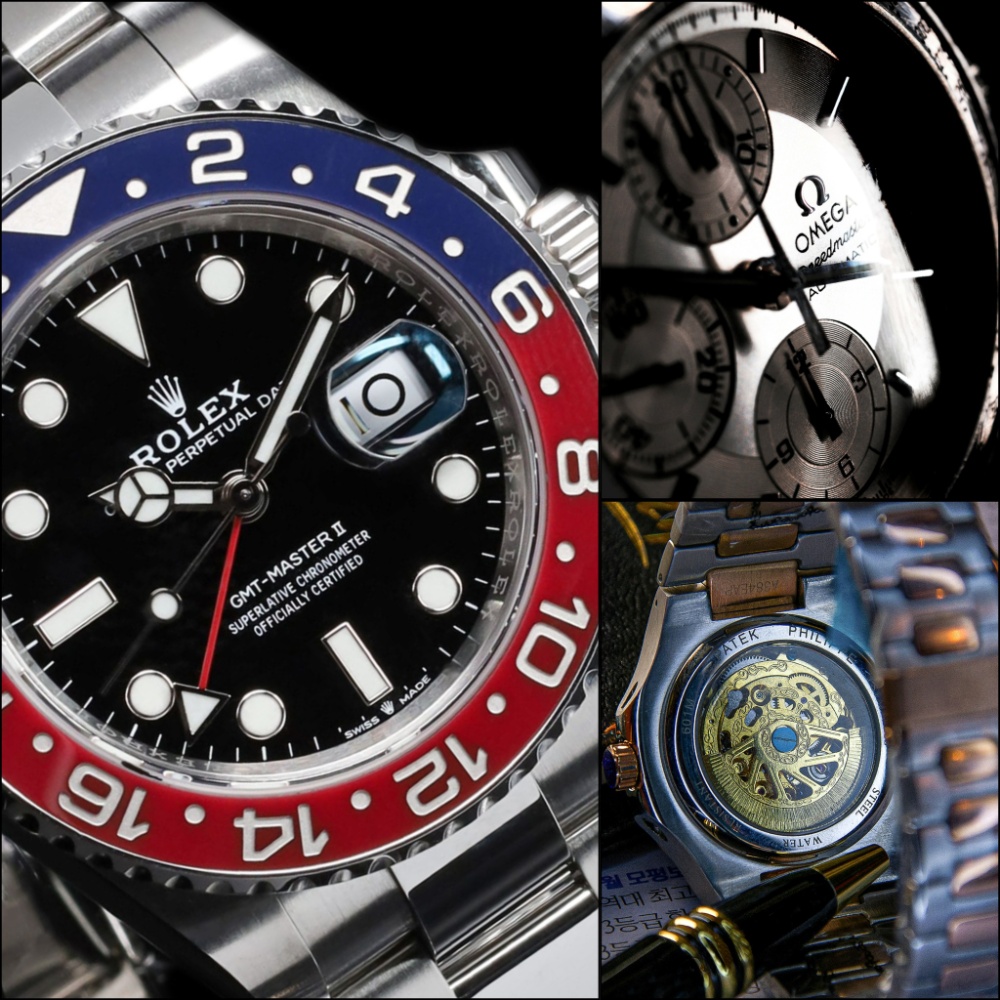
£4,000 at the low end (entry Omega), £8,000+ for most Rolex, into six figures for the top end of Patek Philippe and AP.
What defines them
Long-established Swiss (mostly) manufacturers with in-house movements, decades or centuries of brand heritage, and premium materials throughout. You’re paying for engineering pedigree, brand prestige, and often genuine investment/resale value.
- Examples
- Rolex
- Omega
- Patek Philippe
- Audemars Piguet
Why people love them
- In-house movements with high finishing standards
- Strong resale value — some models even appreciate over time
- Status and heritage that’s recognized globally, not just among enthusiasts
Very high entry price, often with long waitlists for the most desirable models regardless of budget.
Origins
Rolex, the archetypal luxury brand, was actually founded in 1905 in London — not Switzerland — by Hans Wilsdorf and Alfred Davis as a watch importer. It only moved its operations to Geneva in 1919, after the economics of post-war Britain made the move necessary.
Rolex started out simply importing Swiss movements and fitting them into cases made by other companies — a world away from the fully in-house, vertically integrated manufacturer it’s known as today.
Mainstream Brands
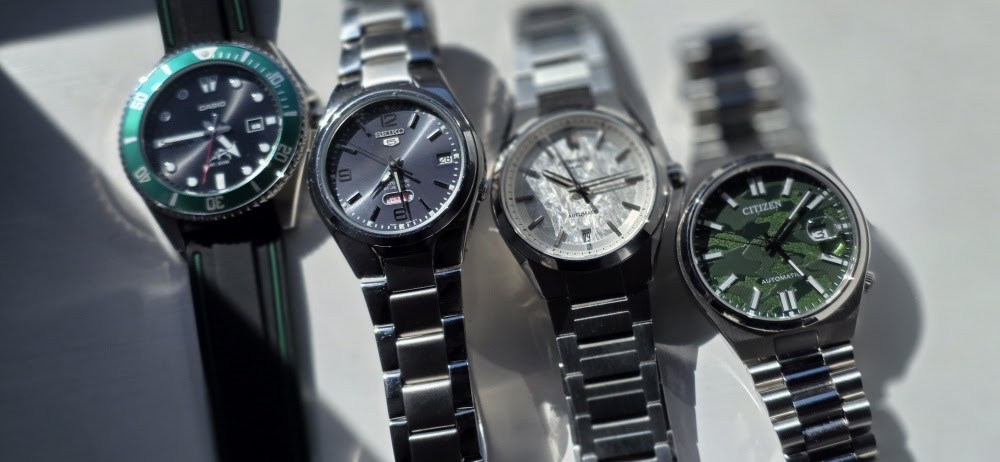
£20–100 for entry pieces, £200–800 for higher-tier lines within the same brand (e.g. Seiko’s Presage or Prospex ranges).
What defines them
Large-scale manufacturers producing watches across a huge range of price points, from genuinely disposable to fairly serious. They dominate on volume, availability, and everyday reliability rather than exclusivity.
- Examples
- Seiko
- Casio
- Citizen
- Timex
Why people love them
- Extremely accessible — available everywhere, easy to service
- Huge range within one brand, from £20 to £2,000+
- Reliable, well-documented movements (see the movements guide for specific calibers)
Little to no exclusivity or resale premium; most models are mass-produced rather than collectible.
Origins
Seiko traces back to 1881, when 21-year-old Kintaro Hattori opened a watch and clock repair shop in Tokyo. Casio, by contrast, is a much newer arrival to watches — founded in 1946 as a calculator and electronics company, it didn’t release its first watch (the Casiotron) until 1974.
Despite the “mainstream” label, Seiko is one of only two watch companies in the world — alongside Rolex — considered fully vertically integrated, designing and manufacturing virtually every component of a watch in-house.
Heritage Brands
What defines them
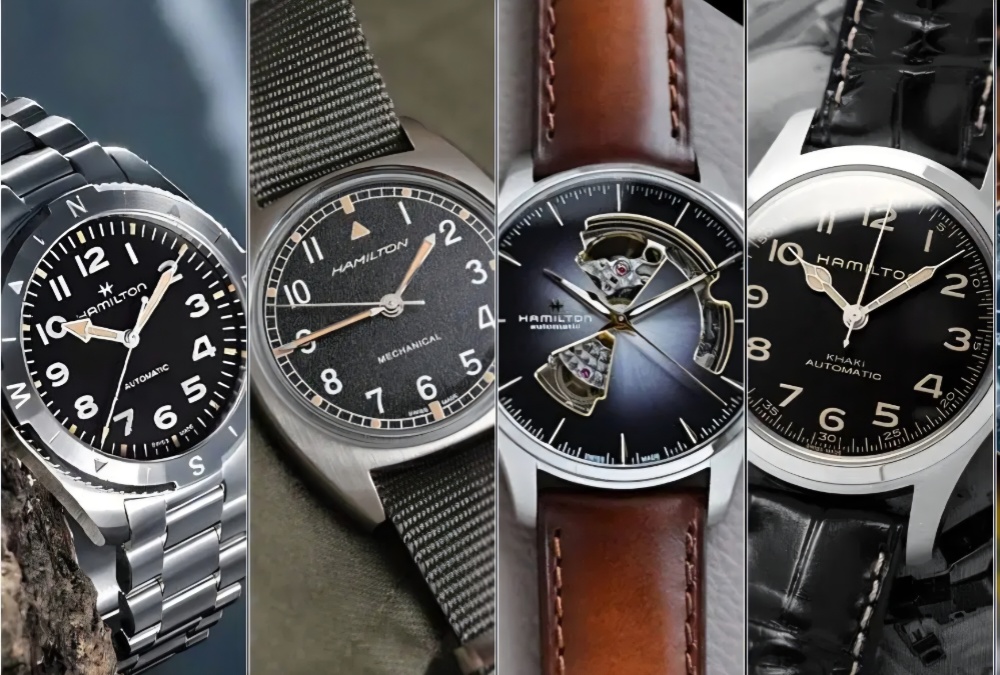
Brands with genuine multi-decade or century-plus history, often tied to a specific innovation or era (military watches, dive watches, aviation), that have repositioned themselves as accessible-luxury or vintage-revival options rather than ultra-premium.
- Examples
- Hamilton
- Doxa
- Longines
Why people love them
- Real historical stories behind specific models, not just marketing
- A sweet spot between mainstream affordability and luxury-brand pedigree
- Often reissue genuinely significant vintage designs faithfully
Sits in an awkward middle ground — not as prestigious as true luxury, not as cheap as mainstream, so value can be a harder sell to newcomers.
Origins
Hamilton was founded in 1892 in Lancaster, Pennsylvania, as an American company, before shifting all manufacturing to Switzerland in 1969. Doxa is even older, founded in 1889 in Le Locle, Switzerland, by 21-year-old Georges Ducommun, who started out making precision pocket watches and dashboard clocks for early automobiles.
Doxa essentially invented the modern dive watch — its 1967 SUB 300 introduced the bright orange dial and no-decompression bezel that are still industry-standard dive watch features today, developed in partnership with Jacques Cousteau’s diving team. Separately, Hamilton later developed the Pulsar, the world’s first digital watch, covered in the movements guide.
Microbrands
What defines them
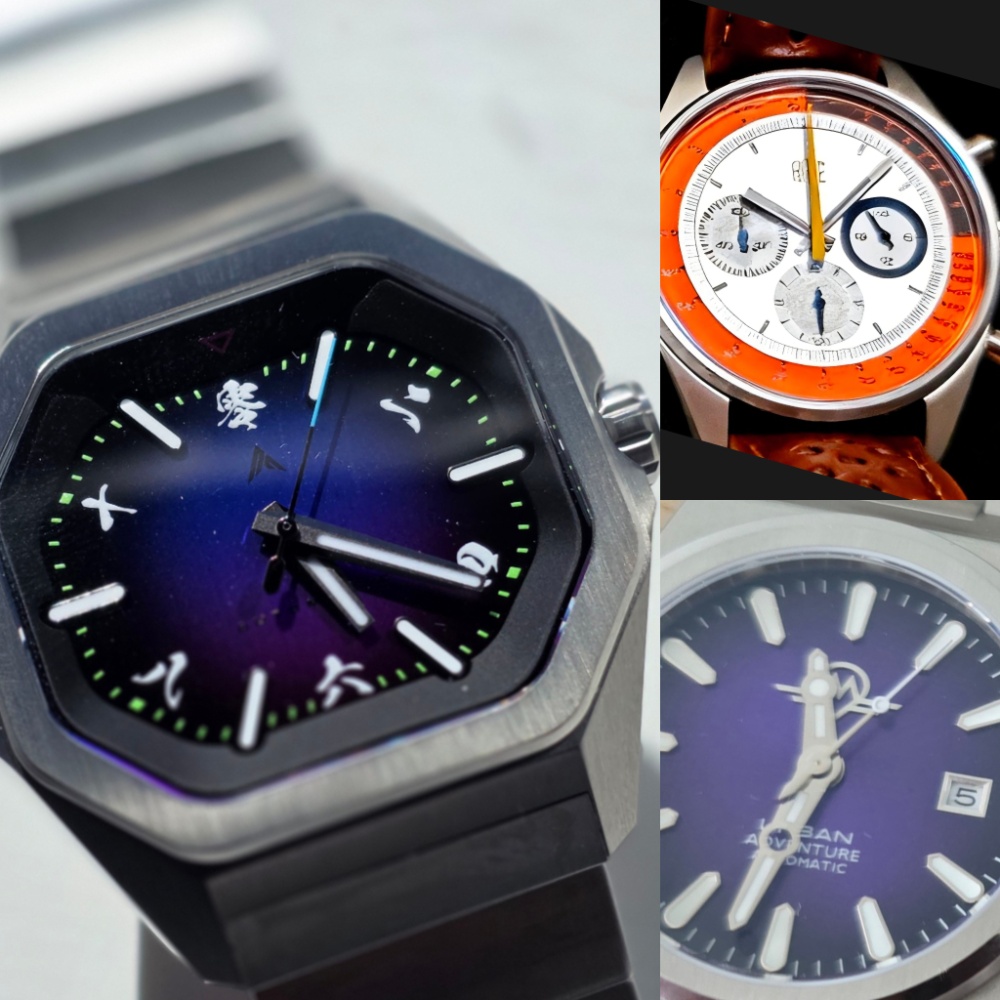
Small, independently minded companies who design watches and outsource manufacturing (typically using off-the-shelf movements like the Seiko NH35 or Miyota 9015 covered in the movements guide) rather than building everything in-house. Usually funded and sold through Kickstarter/Indiegogo or direct pre-order.
It’s worth knowing that “microbrand” already covers a huge range — from a small team shipping thousands of units a year with an established back catalogue, down to a genuine one-person operation with a single small release. That smaller end of the spectrum has its own informal label, “nanobrand,” which gets its own sub-section at the end of this one.
- Examples
- Monro
- Marloe
Why people love them
- Distinctive designs you won’t see on everyone else’s wrist
- Direct relationship with small teams, often very engaged with their community
- Genuinely good value, since you’re not paying for a big marketing budget
Quality control and after-sales support vary a lot brand to brand, and this variance tends to be more pronounced the smaller and newer the operation is; some microbrands don’t survive long-term, which can matter for future servicing.
Origins
Microbrands are a distinctly 21st-century phenomenon, enabled almost entirely by the internet — cheap access to overseas manufacturing plus direct-to-consumer sales through crowdfunding platforms. The category really took off through the 2010s: Kickstarter watch funding grew from around $101,000 across two projects in 2012 to over $7.4 million across 87 projects by 2015.
One microbrand founder described the shift bluntly: the internet made it possible to run a watch brand “from your bedroom” — genuinely one person handling design, sourcing, marketing, and customer service simultaneously, something that simply wasn’t possible before crowdfunding and direct-to-consumer e-commerce existed.
Nanobrands: The Smaller End of Microbrands
Broadly in line with microbrands, though very small runs mean higher per-unit costs, so pricing can vary more than in the wider microbrand space.
What defines them
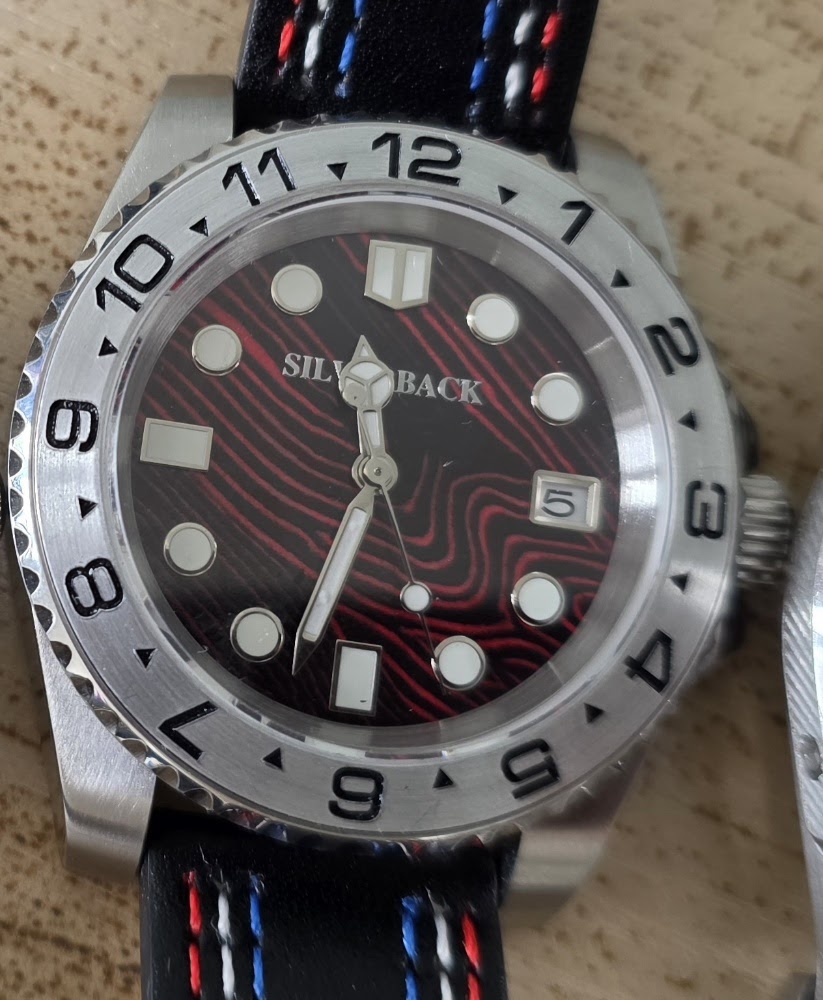
“Nanobrand” is an informal, enthusiast-coined term for the very smallest microbrands — typically one person (or a tiny partnership) handling design, sourcing, sales, and customer service alone, with production runs that can be as small as a few dozen pieces. They use the same kind of outsourced, off-the-shelf movements as any other microbrand; the difference is purely scale. Worth knowing: it isn’t an official industry category, and it shouldn’t be confused with Independents (covered below), which are defined by building their own movements in-house rather than by how small they are.
Why people love them
- Genuinely limited pieces — a sold-out run can mean only a handful of people own one
- Direct contact with the person who actually designed and assembled your watch
- Often more willing to take creative risks that larger brands wouldn’t
With so little track record and a single person behind the brand, there’s more uncertainty — slower communication, longer delivery times, and no guarantee of servicing or replacement parts if the founder moves on.
Origins
Nanobrands grew out of the same internet-era forces as microbrands — cheap overseas manufacturing, social media for reaching buyers, and direct-to-consumer sales — just pushed to an even smaller, more personal scale. Because the term is informal, there’s no agreed cut-off between a “nano” and a “micro” brand; it’s more a matter of degree.
Independents
What defines them
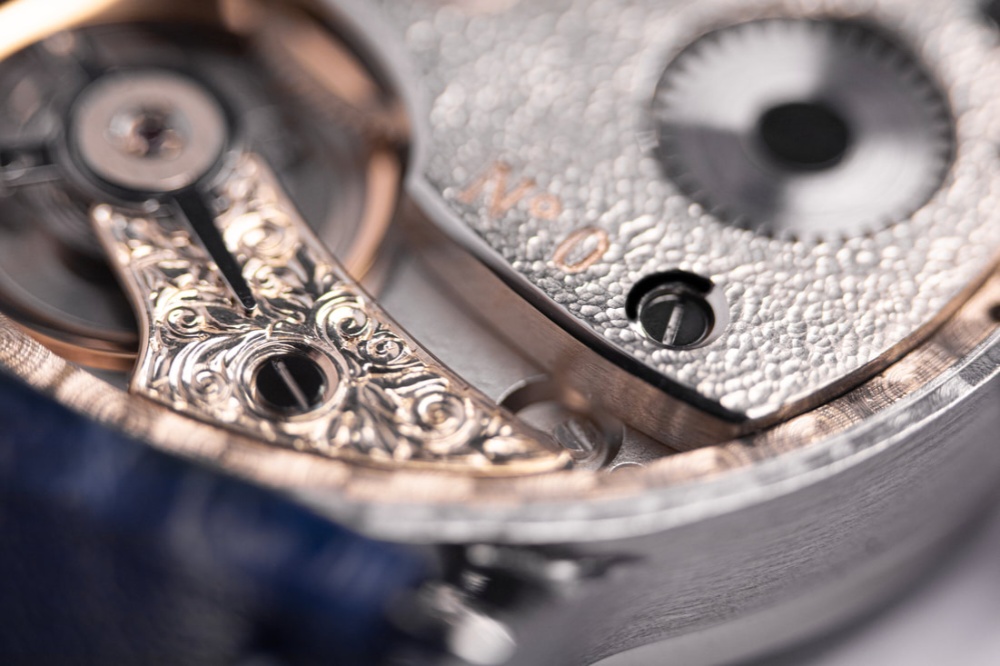
Not to be confused with microbrands — true independents are small-scale watchmakers, often a single named watchmaker or a tiny atelier, who design and finish their own movements in-house rather than using off-the-shelf calibers. This is watchmaking as genuine craft, at the opposite end of “small brand” from a Kickstarter microbrand.
- Examples
- F.P. Journe
- Rexhep Rexhepi (Akrivia)
Why people love them
- Genuine, often groundbreaking in-house engineering from a tiny team
- Extremely limited production, sometimes just dozens of pieces a year
- A completely different collecting culture — closer to fine art than mass consumer goods
Very expensive despite the small-brand feel, and often multi-year waitlists even at that price.
Origins
The modern independent watchmaking movement effectively dates to 1985, when Vincent Calabrese and Svend Andersen founded the AHCI (Académie Horlogère des Créateurs Indépendants) specifically to help solo watchmakers gain recognition at a time when large brands completely dominated the industry’s visibility.
Some of today’s most celebrated names in all of watchmaking — including F.P. Journe himself — built their early reputations through the AHCI, an organization that started with just a handful of members exhibiting together because no single one of them could get noticed alone.
Factory / Direct-to-Consumer Brands
What defines them
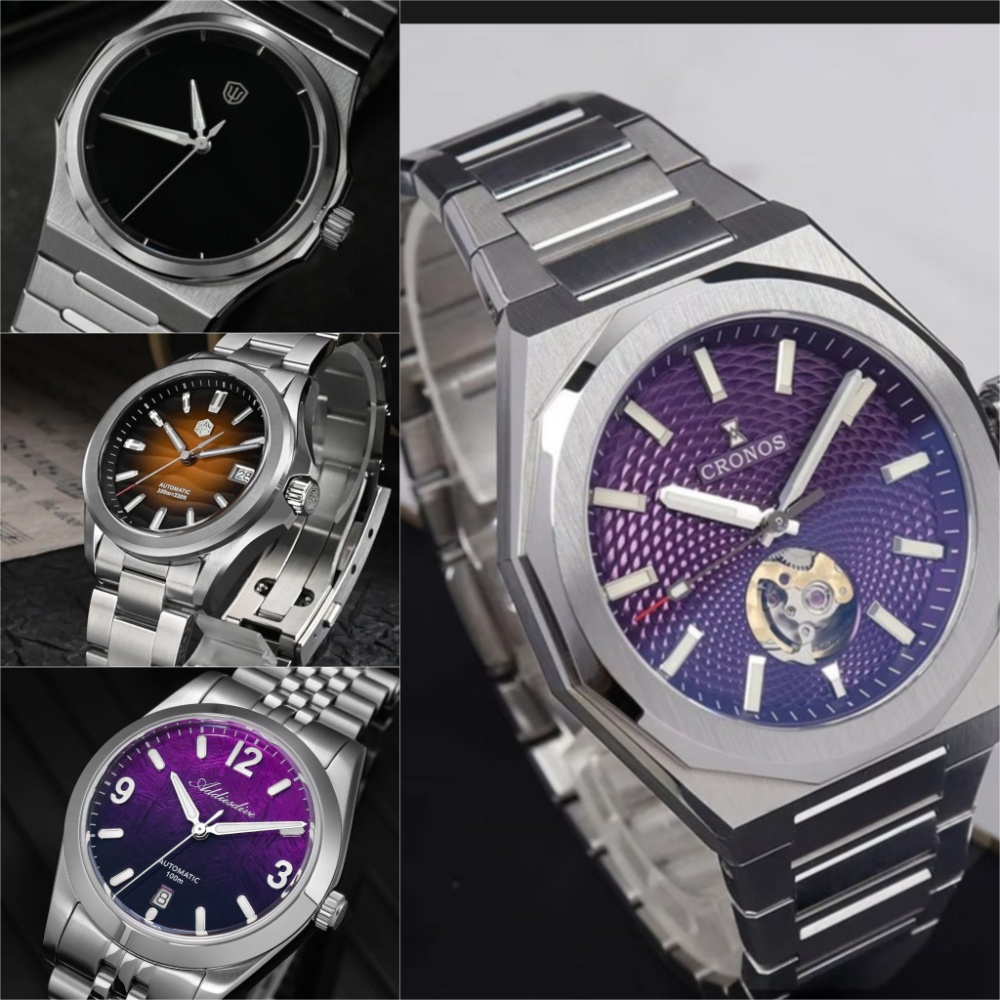
Brands manufactured directly by Chinese factories (often the same factories that supply parts to bigger names) and sold direct-to-consumer online, cutting out traditional retail markup entirely. Quality has improved dramatically in this space over the last decade.
- Examples
- San Martin
- Pagani Design
Why people love them
- Genuinely impressive specs and finishing for the price
- Homage designs of expensive watches at a fraction of the cost
- Fast-moving product range, since there’s no traditional retail lag
Quality control varies watch to watch more than with established brands; limited or no after-sales support in some cases; some designs closely copy established brands’ aesthetics, which is worth being upfront with readers about.
Origins
This category is a direct product of global e-commerce platforms (Alibaba and similar B2B/B2C marketplaces) making overseas factory-direct sales viable for individual consumers from around the 2010s onward, rather than requiring a traditional import/retail chain.
Many of these factories also produce components or entire watches for far more expensive, well-known brands — meaning some of the manufacturing knowledge behind a £100 factory-direct watch genuinely does trace back to the same supply chains used by names charging ten times as much.
Where the tiers sit on price
The tiers overlap more than you might expect. This chart plots the typical price ranges quoted in each section above.
Quick comparison
| Category | Price range | Movement source | Best for |
|---|---|---|---|
| Luxury | £4,000+ | In-house | Heritage, prestige, resale value |
| Mainstream | £20–800 | In-house (varies by tier) | Everyday reliability, accessibility |
| Heritage | £400–1,500 | Mostly outsourced Swiss/Japanese | Vintage-inspired design, accessible history |
| Microbrand | £150–600 | Outsourced (NH35, Miyota, etc.) | Distinctive design, community feel |
| Nanobrand (microbrand sub-type) | Broadly similar to microbrands | Outsourced | Ultra-limited runs, direct contact with the maker |
| Independent | £30,000+ | Fully in-house, hand-finished | Serious collectors, genuine craft |
| Factory/DTC | £50–250 | Outsourced | Budget homages, spec-for-price value |
Final thoughts
There’s no “correct” tier to collect in — plenty of serious enthusiasts happily own a £150 microbrand and a £8,000 luxury piece side by side. Knowing these categories mostly helps you set realistic expectations: what you’re actually paying for changes completely depending on which tier a brand sits in, and that’s the difference between feeling like you got great value and feeling let down by something that was never trying to be a luxury watch in the first place.